

ABOUT
ABOUT COACH PEDRO
COACH PEDRO
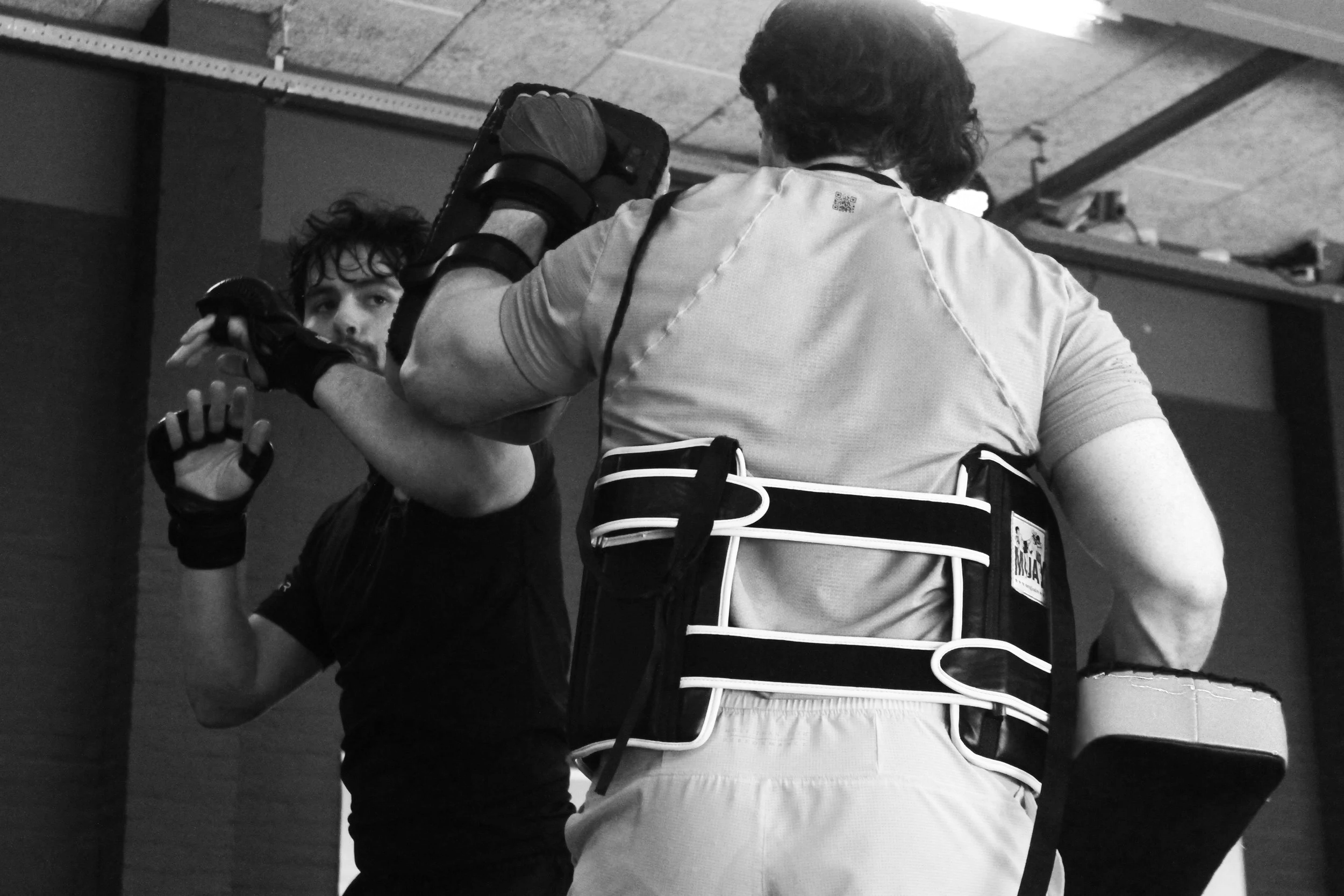
I have been training and competing in combat sports for over a decade now, but I honestly can’t remember a time where I was not in love with martial arts.
It started with Muay Thai when I was about 11, which I immediately fell in love with, dedicating as much time as I could to become a better fighter.
I picked up Brazilian Jiu Jitsu 7 years after as an attempt to round myself out more, which evolved into an obsession with the full game of MMA and eventually a professional kickboxing and MMA career.

Coaching came from that same obsession. I was far from one of the most talented or athletic beginners in the gym, so I tried to get an edge by becoming as knowledgeable on technique and strategy as I could, which eventually evolved into trying to teach others the same!
Alongside competing and teaching, I produce analytical content through Focus MMA. Fighter breakdowns, strategy pieces, technique analyses.
It helps spread knowledge about the more obscure parts of the sport and keeps me thinking rigorously about the game in a way that feeds directly into how I approach all of my work.


my coaching philosophy
The gap between what gets practised and what actually shows up under sparring or fight pressure is the central problem in combat sports coaching. There’s the age old issue of the fighters who look great during drills or shadowboxing but whose skills evaporate during performance. My intent is to have high transfer and technical understanding as the focal points of training to deliberately close that gap.
Every drill, every round, every concept worked on in a session has a clear context and a clear reason for being there. Mechanical repetition has its place in developing good form, but I believe that a fighter who knows why a technique works, when it works, and how to counter it will have a massive advantage over someone who just mindlessly drilled.
the framework
The framework behind Focus MMA coaching draws from two primary sources: scientific literature on skill acquisition and performance, and the systematic study of combat athletes at the highest level.
The research gives insight into which manners of training have been shown to cause the most skill development, how decision-making degrades with fatigue, and how to best skills transferrable into a competitive setting.
Film study puts those principles into action, it allowing for a better understanding of which techniques or approaches produce consistent results across different opponents & contexts and, considering athletic gaps, how those approaches can be adapted for other athletes.
Now making sure skill transfers is ideal, but choosing which skills to emphasise is just as important.
Distance management, footwork, and timing sit at the foundation of everything else, and most technical problems, when traced back far enough, turn out to be fundamental problems in disguise.
A striker getting countered consistently usually has a footwork or tactical problem, not a technique problem.
A grappler who can't chain takedowns usually has a timing and posture problem.
Working at the fundamental level fixes multiple surface issues simultaneously, which is why it takes priority over just learning new techniques.
Fundamentals are also the most transferable qualities a fighter can develop, working regardless of style, ruleset, or opponent, but the expression of them is different for each person. Physical attributes, existing skill set, fighting style and personality all shape how someone can choose to apply a technique. My own coaching experience and extensive film study have shown me the importance of knowing how to work with a fighter’s tendencies, not forcing them to fight a particular way because it’s what I, personally, would consider the best, but giving them the tactical tools and feedback to become better at fighting their own way.
No two athletes will be coached the same way at Focus MMA, because no two athletes have the same needs.
Sessions are structured around a concept rather than a technique list.
Drilling is situational rather than mechanical, meaning the technique is always practised in a context that reflects when and why you'd use it in a real fight.
Before physical work begins, the idea being trained is explained - what it is, why it matters, and what problem it solves.
It then follows into situational sparring, where before jumping back into full chaos, sparring is done with some technical limitations (e.g. you can only throw after feinting at least twice) in order to force the athletes to engage with the elements of the class in a more free flowing scenario, and only then do we fully commit to sparring, once the fighters have the technique application fresh in their minds.
Feedback is specific and immediate, and every session connects to the ones before and after it as part of a broader development arc rather than existing in isolation.
The goal at every stage is the same, to produce a fighter who understands the game deeply enough to expertly execute their own gameplan and solve problems they've never encountered before, not just ones they've been prepared for.